




By: World Market Editorial Team | Published: August 14, 2026
Accent Chair Buying Guide: Styles, Sizes & How to Choose

What Is an Accent Chair?
An accent chair is a single chair (or a pair) that contrasts with or complements your main seating. It's typically smaller than a sofa, often more sculptural, and designed to add visual interest as much as seating. Think wingbacks, swivel chairs, papasan chairs, slipper chairs, club chairs, rattan, and wicker silhouettes.

Accent Chair Styles to Know
Wingback
Tall back, defined "wings" with a curving silhouette. Feels traditional and grand, yet comfy enough to sit in all day. Pairs well with classic sofas, patterned rugs, and rooms with vertical scale.
Slipper Chair
Armless, low-profile. Has a modern, clean, and feminine vibe. Ideal for tight spaces and cozy reading nooks.
Club Chair
Low arms, deep seat, often in leather or velvet. Fits perfectly in a cozy, traditional space. Excellent in lounge-y spaces with side tables and a reading lamp.
Papasan
Round, bowl-shaped cushion in a rattan or wicker frame. A classic World Market find with boho appeal. For the full breakdown, see our papasan chair guide.
Swivel Chair
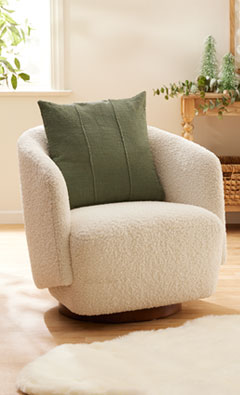
360-degree rotation. Delivers a modern and architectural look. Excellent for open-plan rooms where the chair faces both a TV and conversation areas.
Accent Armchair
Anything from a sculpted velvet chair to a rattan barrel chair. The point is the silhouette and material more than a defined "type."

How to Size an Accent Chair
The sizing mistakes are usually one of three:
- • The 4-inch rule: Designers use this constantly. Seat heights should be within four inches of each other. A super-low slipper chair next to a deep, tall sofa makes the sofa look gigantic and the chair look like a child's seat.
- • Proportional width: An accent chair should generally be no more than two-thirds the seat width of a single sofa cushion. A 25"–35" wide chair is the sweet spot for most living rooms.
- • Walking clearance: Leave at least 30 inches of clear path around the chair. Accent chairs that block a walking lane stop being used and start being a hassle.

How to Choose the Right Accent Chair
Step 1: Decide What Job It's Doing
An accent chair can do one of three jobs. Pick one before you shop:
- • Add color — A bold velvet or upholstered chair brings a non-neutral color into a room of grays and tans.
- • Add texture — A rattan, wicker, or boucle chair adds tactile interest to a room with smooth surfaces.
- • Add shape — A sculptural silhouette (round, curved, peaked back) breaks up the rectangular geometry of a typical sofa-and-coffee-table setup.
Step 2: Pair, Don't Match
Accent chairs are siblings to your sofa, not twins. They should share something — a finish, a wood tone, a complementary color — but they shouldn't match. Two identical chairs flanking a sofa is symmetrical and timeless. Two mismatched chairs (one rattan, one velvet) feels collected and intentional.
Step 3: Test the Comfort
An accent chair that's too pretty to sit in is a waste of square footage. Read reviews for comfort notes. If you're shopping in person, sit for at least 60 seconds. Most discomfort surfaces after the first 30 seconds.

Where to Place an Accent Chair


Materials and Finishes
- • Rattan and wicker: Light visual appeal, hand-woven texture, on-brand for boho and global rooms. Add a cushion for comfort.
- • Chenille: Often compared to velvet for its soft, plush feel, chenille offers cozy comfort with a more textured, matte appearance. It's an easy way to bring warmth and dimension to your space.
- • Linen and cotton: Casual, soft, lived-in. Slipcovered versions are easiest to clean.
- • Boucle: Nubby, sculptural, currently very popular. Best on rounded silhouettes.
- • Hand-carved wood frames: Adds craft and character. Look for solid wood, not veneer over MDF.

Layered Comfort—Pillows and Throws
One throw pillow on an accent chair is plenty. A folded throw over the back or arm finishes the look. Resist the urge to pile up pillows. Accent chairs work because they're not sofas.


Frequently Asked Questions
Some are, some aren't. Comfort varies dramatically by silhouette. Wingback, club, and swivel chairs are typically built for everyday use. Slipper chairs, sculptural designer pieces, and very low silhouettes are best as occasional seating. Always read reviews on comfort. Browse our full assortment of living room chairs, and pair with sofas and loveseats, throw pillows, and throws to build a complete living room.